


Eagle Stone Universal Investigations • Southern California
Find a person. Locate for service. Make sense of vehicle sightings.
A name, an old address, or a license plate can be a starting point. The right investigation depends on the question you need answered—and how the information will be used.
Person searches develop identity and address leads. Locate-for-service work helps identify where a recipient may be found. A vehicle sightings report reviews available historical records to show where a vehicle was recorded and whether sightings repeat.
Based in Huntington Beach, serving Orange County and Los Angeles County, including inquiries from Costa Mesa, Fountain Valley, Cypress, Cerritos, and Downey. Discuss the location and scope of your case when you contact us.
What do you need to find?
Person locator & address lookup
Start here when you have identifying information but need a better lead on a person’s whereabouts or address.
Useful starting details: full name, known aliases, approximate age, previous addresses, and the date of your last reliable contact.
A matching record is a lead to evaluate. It may be outdated or belong to someone with a similar name.
Skip tracing & locate for service
Start here when legal papers need to reach someone and the address is missing, stale, or has produced unsuccessful attempts.
Useful starting details: the case type, deadline, known addresses, and a dated log of previous service attempts.
Locating a recipient and completing service are separate tasks. Confirm the permitted method with your attorney or process server.
License plate & vehicle sightings
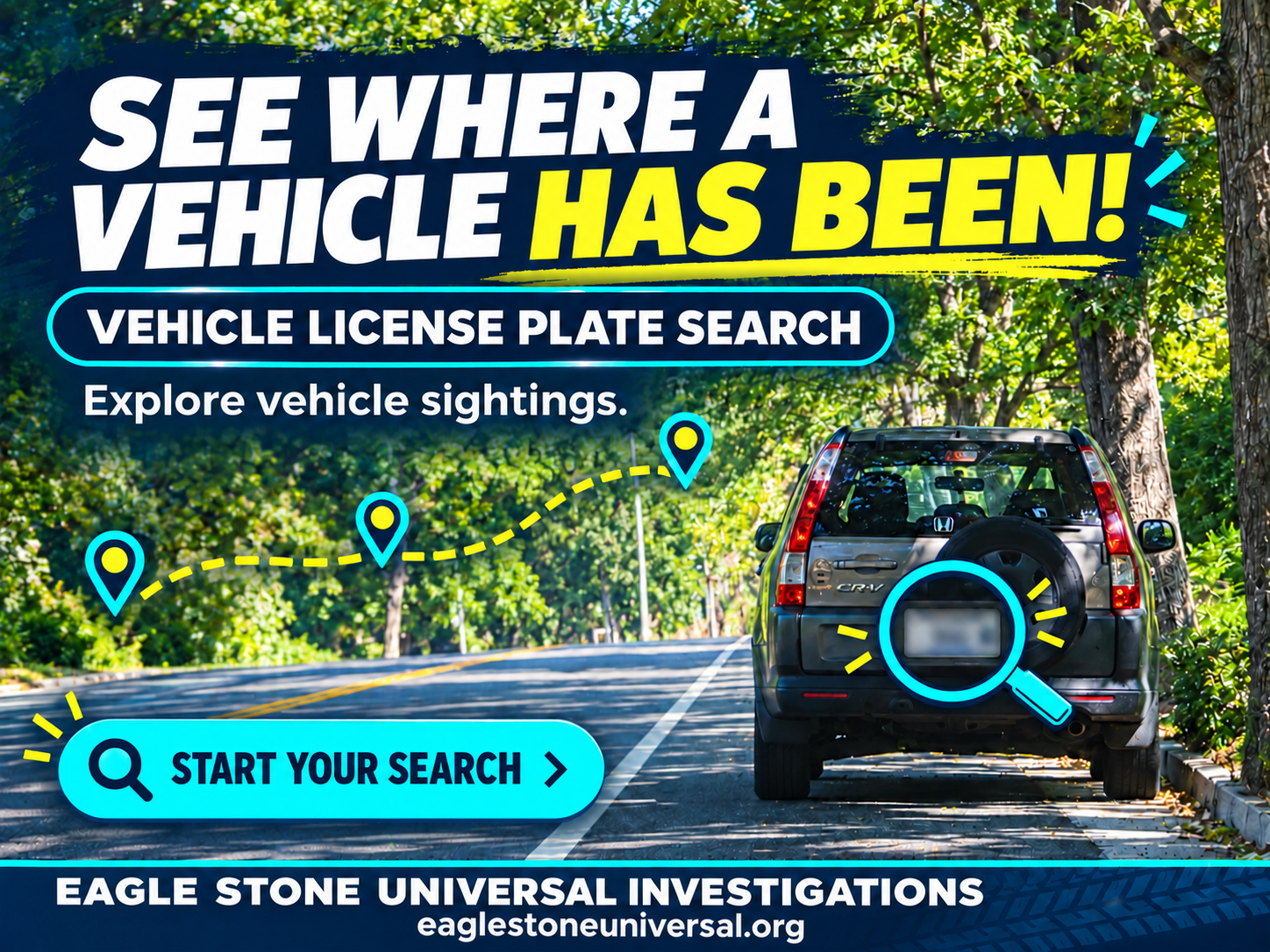
Start here when your question concerns a vehicle’s recorded locations, dates, times, or repeat sightings.
Useful starting details: plate number and state, a clear plate photo if available, make, model, color, and the relevant time period.
Available sightings describe historical observations. They do not provide a live GPS location or identify who was driving.
Where has a vehicle been—and what does a pattern actually mean?
A vehicle sightings report can include available sighting images, locations, dates, times, and repeat-sighting counts. The useful question is whether those observations help answer your specific case question.
1. Recorded
What does the actual record show? Check the plate, date, time, location, and available image before drawing a conclusion.
2. Compared
Do sightings recur on different dates or within similar time windows? Separate repeated observations from a single isolated event.
3. Followed up
What still needs verification? A historical lead may support a next step, but it does not establish a current address or present location.
Finding someone to serve: connect the lead to the next step
If an old address has failed, organize what is known before another attempt. Give your investigator or server the date of each attempt, its result, and any reliable identifying details. Tell them about the deadline at the outset.
California service procedures depend on the case and documents. An address search by itself does not complete service or establish that a particular method is allowed. Use the California Courts guide to serving papers and, for family-law situations involving an unknown address, the court’s guide to finding someone to serve. Follow case-specific instructions from the court or your attorney.
A better inquiry starts with four things
- Your question: Is the goal an address lead, locating a service recipient, or reviewing historical vehicle sightings?
- Your starting information: Bring the identifiers you already have. Distinguish confirmed facts from guesses.
- Your time frame: State any service deadline and the dates that matter to your question.
- Your purpose and next step: Explain why the information is needed and who will use the result. Scope and access depend on the circumstances and applicable requirements.
Begin with a brief inquiry. Ask how to provide documents or sensitive identifying information before sending them. An initial conversation can clarify feasibility, scope, available records, and the type of follow-up needed.
Direct answers to common search questions
Can a private investigator find a person with only a name?
A name can start a search, but additional identifiers help distinguish people with similar names. Prior addresses, approximate age, aliases, and last reliable contact can improve the inquiry. A successful or current location cannot be guaranteed.
Can you help locate someone so they can be served?
Locate-for-service work develops leads on where the recipient may be found. Share prior attempts and deadlines. Completing service, choosing a lawful method, and preparing proof of service require separate case-specific steps.
Can a license plate search show a vehicle’s current location?
A vehicle sightings report concerns available historical observations. It is not a live tracking service, and a past sighting does not establish where the vehicle is now.
Can repeat vehicle sightings prove where someone lives?
Repeat sightings can help identify a lead or a pattern within the available records. They do not by themselves prove residency, identify the driver, or establish a person’s complete routine.
How much does a person or vehicle search cost?
Scope, available identifiers, record availability, and follow-up needs affect the work. Contact Eagle Stone Universal Investigations to discuss your question and obtain pricing for the proposed scope before proceeding.
How do I check a California private investigator’s license?
Use the California BSIS license verification service and search the private investigator category by business or license information. Review the current record rather than relying only on a website claim.
Turn your starting information into a clear next step.
Tell Eagle Stone Universal Investigations what you need to establish, what you already know, and when you need the answer.
Related guidance: Before you hire an investigator · View investigation services
Prepared by Eagle Stone Universal Investigations. Updated October 3, 2026. Examples on this page are illustrative, not claims about a client’s case.